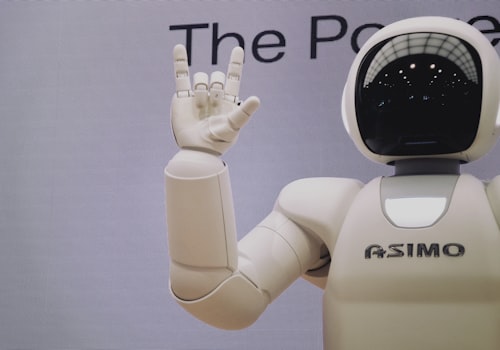
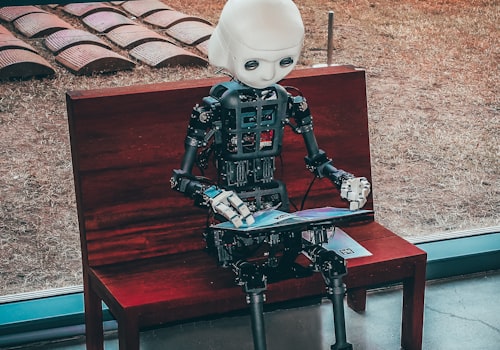
Think of a simple problem you want to solve with AI!
💡
Choose your problem
📸
Collect training data
🤖
Train your model
🎯
Test & improve
Examples: Emotion detector, Hand gesture recognizer, Object classifier
References & Further Reading
Cancer Detection AI
McKinney, S.M. et al. (2020). International evaluation of an AI system for breast cancer screening. Nature Medicine, 587, 146-151.
Cancer Screening Stats
Kerlikowske, K. et al. (2013). Performance of screening mammography among women with and without a first-degree relative with breast cancer. Cancer, 119(20), 3639-3643.
Road Safety Statistics
World Health Organization (2018). Global Status Report on Road Safety 2018. WHO Press, Geneva.
Human Error in Crashes
Singh, S. (2015). Critical reasons for crashes investigated in the National Motor Vehicle Crash Causation Survey. NHTSA, DOT HS 812 115.
Tesla Safety Data
Tesla Inc. (2023). Vehicle Safety Report Q4 2023. Retrieved from tesla.com/vehiclesafety
ImageNet Classification
He, K. et al. (2016). Deep Residual Learning for Image Recognition. Proceedings of CVPR, 770-778.
AI in Dermatology
Esteva, A. et al. (2017). Dermatologist-level classification of skin cancer with deep neural networks. Nature, 542, 115-118.
Waymo Safety Report
Waymo LLC (2023). Waymo Safety Report: On the Road to Fully Self-Driving. Alphabet Inc.